Is Our Cacao Processed? The Truth About Minimal Processing & Why It Matters
Many customers write to us with variations of the same question:
“Is your cacao processed?”
“I heard ceremonial cacao is processed — is that true?”
“Is this paste raw or unroasted?”
These are excellent questions - and we believe the cacao community deserves clear, scientific, and honest answers.
This article explains exactly what happens to our cacao from the forest to your cup, why some processing is natural and necessary, and how our approach preserves nutrients, benefits, and integrity.
Yes - All Ceremonial Cacao Paste Is Processed (Including Ours)
But processed does not mean industrial, altered, or synthetic.
In cacao, “processing” simply means transforming a cacao bean into an edible, safe, drinkable paste.
This includes:
- Fermentation (natural, necessary, temperature-rising)
- Sun-drying
- Light roasting
- Winnowing (removing the shell)
- Grinding nibs into paste
Every ceremonial cacao on the market - from every country - goes through these steps.
What makes brands different is how much and how intensely they process the beans.
-
Our Philosophy: Minimal Processing That Respects the Plant
Cacao Adventures follows a philosophy rooted in:
✔ Preservation of nutrients
✔ Respect for ancestral cacao genetics
✔ Safety and cleanliness
✔ Flavor development without burning or maskingOur beans undergo only the steps necessary for safety, quality, and digestibility - nothing more.
Absolutely no:
✘ Alkalization
✘ Dutch processing
✘ Additives or fillers
✘ Lecithins
✘ Sweeteners
✘ GMO cacao - There is A LOT of more affordable and high yields.
✘ High-temperature roasting to hide imperfectionsWe work with cacao in its purest possible form while still honoring safety and flavor.
Why We Lightly Roast (and Why It Matters)
Roasting is often misunderstood.
Industrial chocolate uses high-temperature roasting to burn off acidity, bitterness, and defects.
We don’t need that.
Because we start with wild, extremely high-quality cacao and work directly with trained farmers, gentle roasting is enough to:
- Kill harmful microbes
- Bring out natural flavor notes
- Maintain polyphenols and antioxidants
- Avoid nutrient damage
- Create a smoother, ceremonial texture
This is why your ceremonial drink tastes clean, balanced, and naturally delicious. If you drink a cacao that is very bitter, it’s usually because the beans were burned during high-heat roasting - a process that also causes the cacao to lose many of its natural properties.
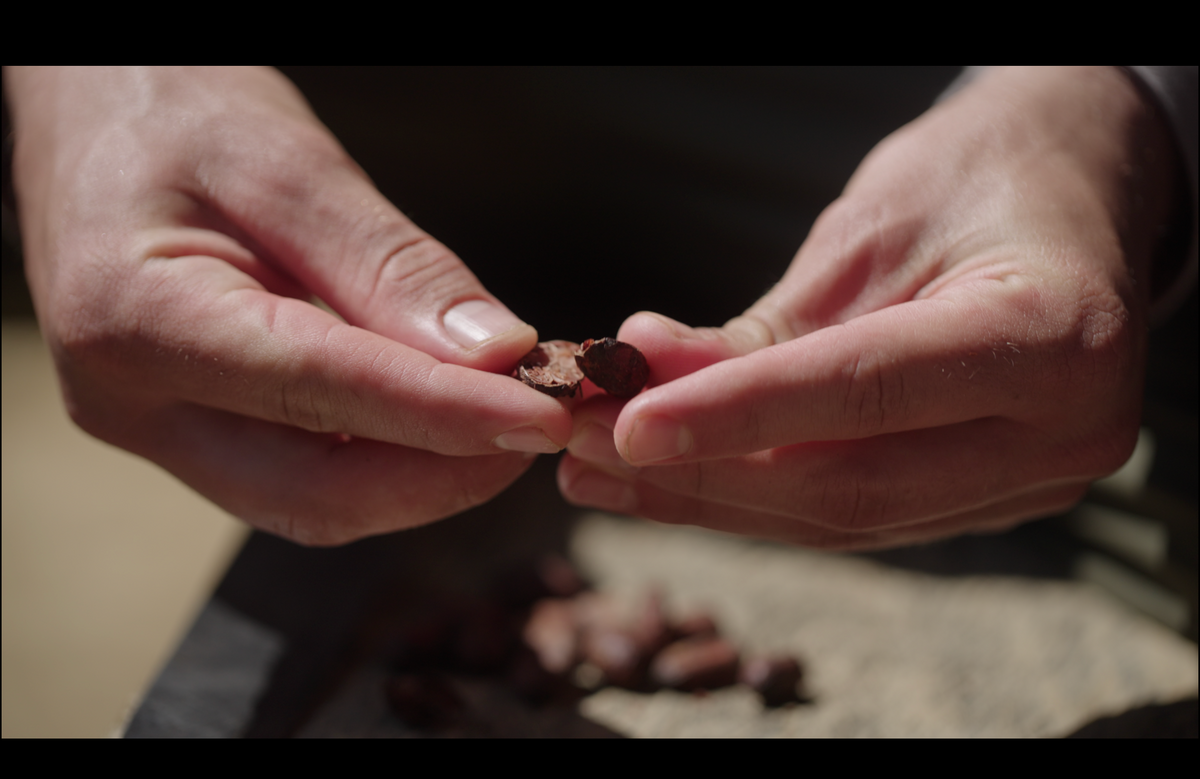
 Picture of Jose's hands, our founder, evaluating a bean with the Awajun community. March 2025.
Grinding Creates Heat - This Is Why Paste Cannot Be Truly Raw
Even if beans were never roasted (which would be unsafe), grinding cacao nibs into paste generates friction heat.
This step:
- Melts cacao butter (naturally present in cacao)
- Creates the fluid texture of paste
- Naturally surpasses raw temperature thresholds
It is physically impossible to produce cacao paste that is truly raw.
We choose truth over marketing trends.
How Our Minimal Processing Preserves Cacao’s Benefits
Thanks to selective sourcing, partnering with the stewards of wild strains of cacao in Peru, careful handling, and slow, artisanal methods, our ceremonial cacao maintains:
- Natural theobromine content
- High magnesium levels
- Antioxidants and polyphenols
- Mood-enhancing compounds (PEA, anandamide)
- Deep, complex flavor notes
- Clean energetic profile
In other words: we preserve everything cacao is meant to be while partnering with the most amazing small family farms and indigenous communities that steward the wild strains of cacao.
The Role of José & Our Farmer Relationships
This is a part of our story we’re truly proud of.
For over 10 years, José has worked directly with cacao communities in Peru, collaborating with farmers and sharing expertise in:
- Fermentation techniques
- Drying practices
- Hygiene standards
- Quality control
- Wild genotype preservation
Because the beans arrive to us with exceptional integrity, we can keep our processing gentle - we don’t need to “fix” the cacao with intense heat or chemicals, as many industrial chocolate makers do.
Note: Most of the time, dark chocolate shouldn't be bitter, if it's bitter it is because it's usually burnt when roasting. Why? To hide imperfections.
The incredible communities we work with are the true stewards of these wild cacao landscapes. They have protected and cared for these native varieties for generations, even though they've been in danger since some of them were offered to plant the infamous and high yield hybrid strains. We consider ourselves fortunate to partner with them, combining their deep ancestral knowledge with José’s technical expertise.
Together, this partnership becomes a “dream team”:
we honor their custodianship of wild strains, support them in preserving biodiversity, and work side-by-side to elevate quality to a level that allows the true potential of this cacao to shine.
This collaboration is the heart of minimal processing.
-
So… Is Our Cacao Processed?
Yes — but only in the ways nature and safety require.
Nothing more.Raw Whole Cacao Beans
✔ Fermented
✔ Sun-dried
✔ Lightly roasted at the same temperature of the sun to make it safe for human consumption.
✔ Manually selectedCeremonial Cacao Paste
✔ Fermented
✔ Sun-dried
✔ Lightly roasted
✔ Winnowed
✔ Ground into pasteNo alkalization.
No additives.
No high-temperature roasting.
No GMO cacao.
No shortcuts.Minimal processing keeps nutrients and natural compounds intact — while making cacao safe, delicious, and easy to prepare.
-
How This Connects to Raw Cacao (Part 1)
Understanding “processing” only makes sense once you understand what truly counts as “raw.”
If you haven’t yet read Part 1, it provides the foundation:
👉 “What Does ‘Raw’ Really Mean? Understanding Raw, Unroasted & Low-Roast Cacao”Both articles work together to give customers a full, transparent, science-backed picture.
-
Final Thoughts: Integrity Above Everything
Cacao is sacred - and we believe it should be handled with honesty, respect, and transparency.
Our commitment is simple:
Preserve the wild origins.
Honor the plant.
Minimize intervention.
Maintain integrity.Whether you choose our raw beans or our ceremonial paste, you’re receiving cacao that has been cared for at every step.
If you have more questions about our process, we’re always here to answer them.
The native Cacao is a true treasure — and we believe it should be handled with honesty, respect, and transparency.
Our commitment is simple:
Preserve the wild origins.
Honor the plant.
Minimize intervention.
Maintain integrity.Whether you choose our raw beans or our ceremonial paste, you’re receiving cacao that has been cared for at every step.
If you have more questions about our process, we’re always here to answer them.