Why We Test Our Cacao for Heavy Metals (and Why You Should Care)
If you’ve seen recent headlines about heavy metals like lead and cadmium in chocolate, you’re not alone. It can feel unsettling to hear that something as beloved as cacao might carry risks—especially if you drink ceremonial cacao regularly as part of your daily or weekly ritual.
Heavy metals such as lead and cadmium can occur naturally in soil, especially in volcanic regions. But they’re not just a “nature problem.” Industrial pollution, mining, and poor post-harvest practices can all increase the levels of these toxic elements in cacao beans. Once ingested, heavy metals accumulate in the body over time and have been linked to serious health concerns—especially neurological damage, kidney dysfunction, and developmental delays in children.
For us, that makes rigorous testing a non‑negotiable part of working with cacao.
Why Testing Matters Even More for Ceremonial Cacao
Ceremonial cacao isn’t a once‑a‑year dessert. Many people drink it in larger quantities and on a regular basis - as part of meditation, creativity, and community rituals. That means your long‑term exposure matters more than it might with an occasional piece of chocolate.
At Cacao Adventures, we believe that anyone offering cacao in a ceremonial or wellness context has a responsibility to be radically transparent about safety. For us, testing is not about ticking a compliance box; it’s about integrity, health, and trust.
How Heavy Metals Show Up in Cacao
Heavy metals are an agricultural reality, not something “added” in a factory. They can enter cacao at several stages:
- Soil and water – Naturally occurring elements in the earth’s crust, intensified in some volcanic or contaminated regions.
-
Industrial pollution and mining – Historic or nearby industrial activity can elevate levels in the soil over time.
 Ex:
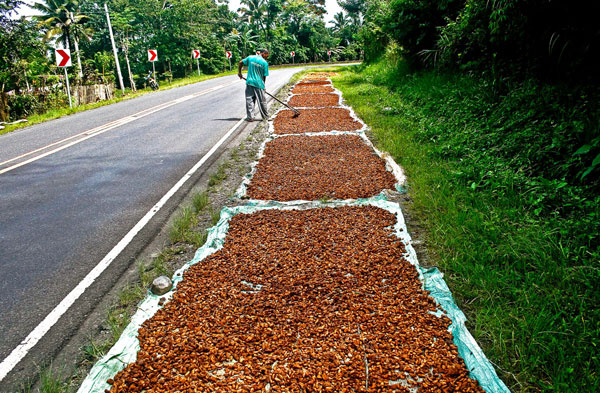
When cacao dries on the side of the road, it can pick up lead that you can later consume as chocolate. Image.
Ex:
When cacao dries on the side of the road, it can pick up lead that you can later consume as chocolate. Image.
- Post‑harvest and processing practices – Poor handling, contaminated equipment, and the use of leftover husks or low‑grade remnants can all increase risk.
Many large‑scale producers of “brewing cacao” work with what’s left over from the chocolate industry - husks and low‑grade fragments that are more likely to carry contamination. In contrast, we use only whole, high‑quality cacao beans sourced directly from trusted farmers.
How We Test Our Cacao
To turn our values into real protections, we’ve built testing into every layer of our process:
- We test every batch. All of our cacao is tested through accredited third‑party laboratories for heavy metals like lead and cadmium. We don’t rely on assumptions or one‑off certificates plus we test at origin, so if the cacao we are purchasing is compromised we can return it as soon as the initial labs come back.
- We hold ourselves to stringent standards. We ensure our cacao meets or exceeds the most conservative safety guidelines available. Regulatory limits are a floor, not our finish line, and we continually review our internal thresholds as new science emerges.
- Testing is built into our HACCP plan. Heavy metal testing is a formal requirement within our HACCP (Hazard Analysis and Critical Control Points) food safety plan, which creates accountability across the entire supply chain - from post‑harvest handling to packaging.
- We start at the source. Our commitment to clean cacao begins in the communities where it’s grown. Jose works directly with farmers, offering training on post‑harvest practices that help minimize contamination risk and improve overall quality. These are long‑term relationships based on trust, and we pay above‑market prices to reward farmers for producing clean, exceptional cacao.
Why This Matters for Your Ritual
Your cacao ritual should be a source of clarity, not concern. When you sit down with a cup of cacao, you shouldn’t have to wonder what’s in it or whether it’s safe to drink regularly.
By:
- Testing every batch through independent, accredited labs
- Building heavy metal testing into our formal food safety plan
- Working hands‑on with farmers at the source ensuring quality (and delicious flavor!)
- Choosing whole, high‑quality beans instead of industrial leftovers.
- Working only with wild strains (no GMO or hybrids).
…we’re backing every bar, coin, and bean with testing, transparency, and heart.
If you’re the kind of person who likes to see the details for yourself, you can review our latest heavy metal results here: Cacao Adventures Heavy Metal Results.