If you have ever stepped into a craft chocolate workshop or scrolled through a health-focused pantry list, you’ve likely encountered cacao nibs. Often described as "nature's chocolate chips," these crunchy morsels are the least processed form of chocolate available.
But beyond the marketing buzzwords, what exactly are they, and why have they become a staple for both professional chefs and nutritionists?
What Are Cacao Nibs?

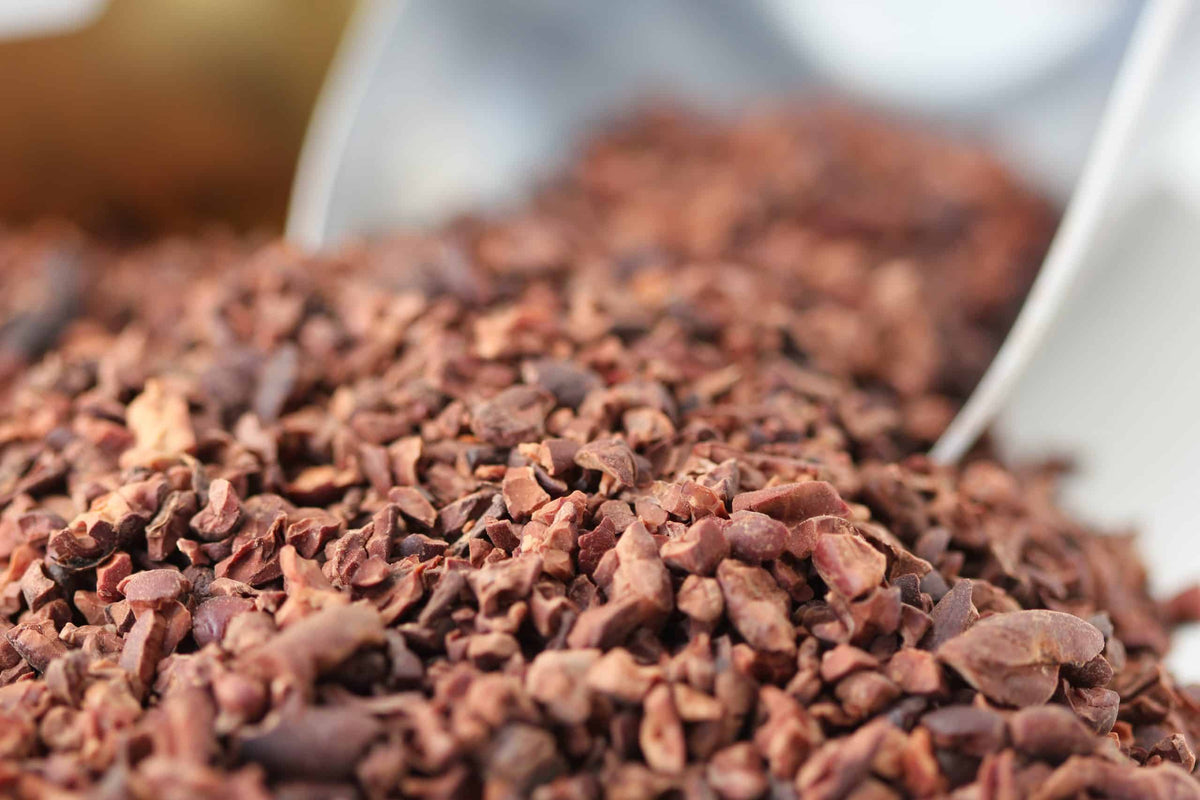
At their simplest, cacao nibs are crumbled pieces of dried, fermented, and roasted cacao beans.
To understand the nib, you have to understand the journey of the Theobroma cacao fruit. After the pods are harvested, the beans are removed, fermented to develop flavor, and dried. The thin, paper-like husk is then removed (a process called winnowing), leaving behind the "meat" of the bean. This is the cacao nib.
Unlike commercial chocolate, nibs contain no added sugar, milk, or emulsifiers. They are 100% cacao, offering a profile that is intensely nutty, earthy, and pleasantly bitter.
How Cacao Nibs Are Made: The Quality Spectrum
Not all nibs are created equal. At Cacao Adventures, we believe the process dictates the final sensory experience. Here is how the transformation happens:
-
Fermentation: This is where the magic happens. Proper fermentation reduces astringency and unlocks the complex fruit and floral notes.
-
Drying: Sun-drying ensures the moisture content drops safely without scorching the delicate fats.
-
Roasting: This is a delicate balance. A light-to-medium roast preserves the "origin characteristics" of the bean, whereas over-roasting can lead to a burnt, one-dimensional flavor.
-
Winnowing: The husks are cracked and blown away, leaving only the pure, crunchy nibs.
Expert Note: Many industrial producers skip or rush the fermentation process. This results in a nib that is overly bitter and lacks the nuanced flavor profile found in artisanal batches.
Cacao Nibs vs. Cocoa Powder vs. Chocolate
It is easy to get lost in the terminology. Here is a quick breakdown:
| Product | Processing Level | Ingredients | Flavor Profile |
| Cacao Nibs | Minimal | 100% Cacao Bean | Nutty, bitter, crunchy |
| Cocoa Powder | High | Cacao solids (fats removed) | Sharp, acidic |
| Dark Chocolate | Moderate | Cacao, Cocoa Butter, Sugar | Sweet, smooth, melting |
Cacao Nibs Nutritional Value: More Than Just a Healthy Snack
When we look at the nutritional value of cacao nibs, we aren't just looking at calories and fats. We are looking at one of the most chemically complex plant foods on the planet. While most people see them as a "sugar-free chocolate chip," science sees them as a concentrated delivery system for minerals and rare mood-enhancing compounds.
According to research supported by the Fine Cacao and Chocolate Institute (FCCI), the nutrient density of cacao is highly dependent on minimal processing. At Cacao Adventures, we prioritize low-heat methods specifically to keep these values as high as possible.
The Raw Data: Nutritional Profile per 100g
To understand the power of the nib, let’s look at the numbers. While a standard serving is typically 1–3 tablespoons (approx. 28g), the 100g breakdown reveals their true potency.
| Nutrient | Amount per 100g | % Daily Value (DV)* |
| Energy | ~600-640 kcal | 32% |
| Fiber | 23 - 33g | 120% |
| Protein | 13 - 14g | 27% |
| Magnesium | 499mg | 118% |
| Iron | 3.9 - 13mg | 22 - 70% |
| Potassium | 1500mg | 32% |
| Copper | 1.8mg | 200% |
| Manganese | 1.3mg | 56% |
How to Use Cacao Nibs in Your Kitchen
Because they don't melt like chocolate chips, nibs add a unique textural element to dishes. Their bitterness acts as a perfect foil to sweet or creamy components.
1. The Morning Routine
Stir them into oatmeal, Greek yogurt, or smoothie bowls. The crunch provides a satisfying contrast to softer textures.
2. Sophisticated Baking
Substitute half of your chocolate chips for nibs in cookies or brownies. This adds "depth" and prevents the dessert from becoming cloyingly sweet.
3. Savory Applications
In many professional kitchens, cacao nibs are treated like peppercorns. They can be crushed and used as a crust for seared duck, or sprinkled over a goat cheese salad for an earthy finish.
What to Look for When Buying
When sourcing cacao nibs, transparency is your best indicator of quality. Look for:
-
Origin: Knowing where the beans come from (e.g., Peru, Ecuador, Madagascar) tells you about the flavor profile.
-
Appearance: The nibs should be dark, uniform in size, and free from excessive "dust" or husk fragments.
-
Sourcing Ethics: Organizations like the Fairtrade Foundation and the Rainforest Alliance provide frameworks, but direct-trade relationships often ensure the highest quality and fairest pay for farmers.
At Cacao Adventures, we prioritize the integrity of the bean from the moment it leaves the tree until it reaches your pantry. Cacao nibs aren't just a "superfood", they are the purest expression of the land they were grown in.
The Science of the Bean: Nutritional Profile
Cacao nibs are more than just a culinary ingredient; they are a concentrated source of bioactive compounds. According to data supported by the International Cacao Organization (ICCO), high-quality cacao is one of the densest sources of polyphenols found in nature.
Key Nutrients Found in Nibs:
-
Flavonoids: Specifically epicatechin, which has been studied for its role in cardiovascular health and blood pressure regulation.
-
Magnesium: Essential for over 300 enzymatic reactions in the human body.
-
Theobromine: A natural alkaloid that provides a gentler, longer-lasting energy boost compared to the "spike and crash" of caffeine.
-
Fiber: Surprisingly, a small serving of nibs provides a significant amount of dietary fiber, aiding in digestion.
Can You Eat Cacao Nibs Every Day?
The short answer is yes, but like all nutrient-dense foods, moderation is the key to reaping the benefits without overstimulation.
Because cacao nibs are the pure "meat" of the bean, they are highly concentrated. Incorporating a small amount into your daily ritua (roughly one to two tablespoons (approx. 15-30g) is generally considered beneficial for most adults.
What Happens When You Make Nibs a Habit?
-
Steady Antioxidant Intake: Daily consumption provides a consistent flow of flavonoids, which the European Food Safety Authority (EFSA) acknowledges can contribute to maintaining the elasticity of blood vessels.
-
Improved Mood: Cacao contains anandamide (often called the "bliss molecule") and phenylethylamine, the same chemical our brains release when we fall in love.
-
The Stimulant Factor: It is important to remember that cacao contains small amounts of caffeine and higher levels of theobromine. If you are sensitive to stimulants, it is best to enjoy your nibs in the morning or early afternoon rather than right before bed.
Chocolate Nibs: The Purest Expression of Flavor
When people search for "chocolate nibs," they are usually looking for that deep, nostalgic cocoa aroma but in its most natural, unprocessed state. In the industry, we call these cacao nibs, and they are essentially the "soul" of every chocolate bar you’ve ever eaten.
Before chocolate becomes a smooth, melting confection, it starts as a crunchy nib. By choosing chocolate nibs over processed chips, you are skipping the emulsifiers, refined sugars, and additives, and going straight to the source of the flavor.
Are They Sweet?
Unlike "dark chocolate chips," pure chocolate nibs are unsweetened. They possess a sophisticated profile that balances a gentle natural bitterness with the earthy, fruity, and floral notes of the High-Amazon Basin soil. Think of them as the "espresso" of the chocolate world—intense, aromatic, and incredibly satisfying.
Sweetened vs. Unsweetened Cacao Nibs: Which Should You Choose?
When browsing for nibs, you will likely encounter two varieties. The choice depends entirely on your palate and your health goals.
Unsweetened Cacao Nibs (The Purest Form)
These are exactly what we’ve discussed: 100% cacao beans, roasted and crushed.
-
The Experience: Bold, bitter, and intensely "chocolatey" without the sugar.
-
Best For: Those watching their sugar intake, keto or paleo diets, and adding crunch to already sweet dishes like smoothie bowls.
-
Why we prefer them: Unsweetened nibs allow the true "terroir" of the cacao bean to shine through. You can taste the difference between a fruity bean from Madagascar and a nutty bean from Ecuador.
Sweetened Cacao Nibs (The Gateway)
Sweetened nibs are usually coated in a thin layer of organic cane sugar, coconut sugar, or even yacon syrup.
-
The Experience: They offer a "snackable" balance. The sugar coating acts as a bridge, softening the natural bitterness of the cacao.
-
Best For: Beginners who find raw cacao too intense, or for use as a standalone snack (like a sophisticated version of trail mix).
-
The Trade-off: While they are more palatable for many, the added sugar does slightly dilute the nutritional density per gram.
Pro Tip: At Cacao Adventures, we recommend starting with unsweetened nibs. If you find them too sharp, you can easily "sweeten" them yourself by mixing them with dried fruit or a drizzle of local honey, giving you total control over your sugar intake.