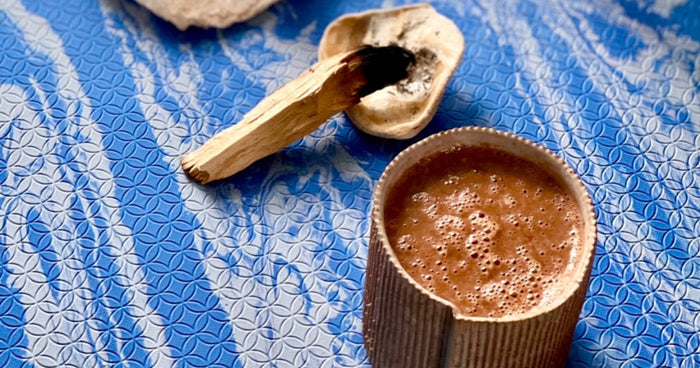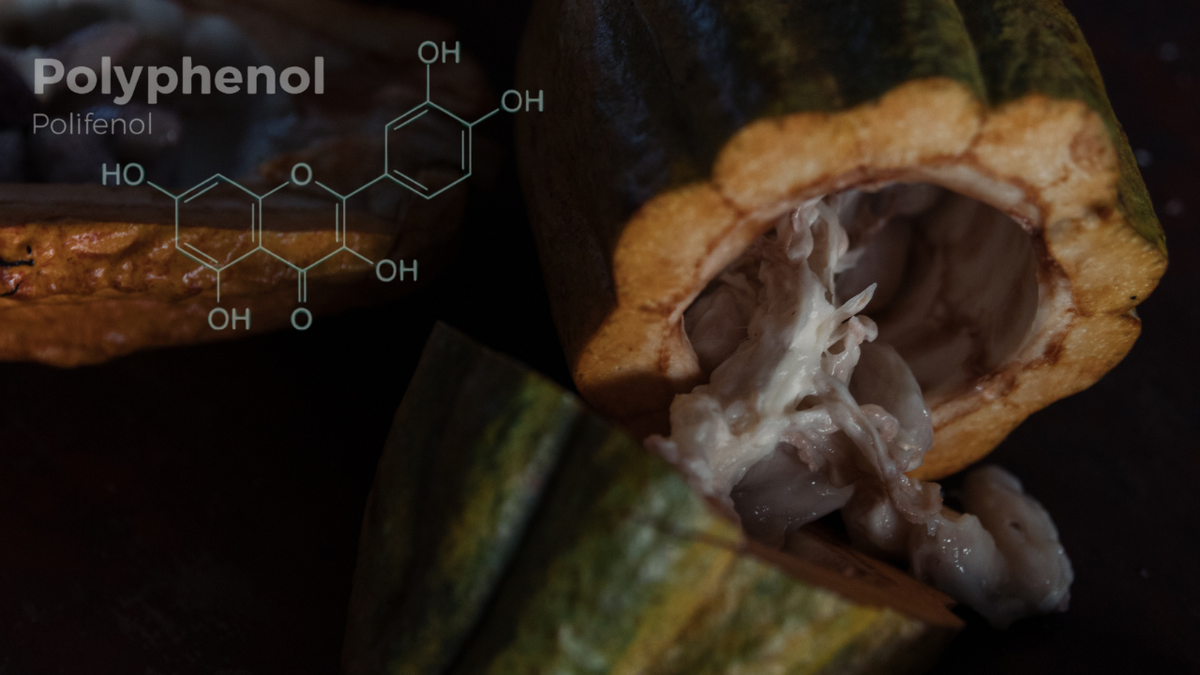
When we talk about the health benefits of dark chocolate or ceremonial cacao, we are fundamentally talking about cacao polyphenols. These naturally occurring micronutrients are the driving force behind cacao's reputation as a functional food.
However, there is a vast difference between the raw chemical potential of a cacao bean and the actual health properties of the chocolate bar you buy at the store. Understanding how these compounds work (and how they survive or degrade during processing) is essential for anyone looking to truly leverage the benefits of cacao.
If you're interest in a deep analysis on that, check our cacao polyphenols guide
What Exactly Are Cacao Polyphenols?
Polyphenols are a broad family of organic compounds found in plants, known for their biological activity. Raw, dried cacao beans are exceptionally rich in them, containing roughly 12% to 18% polyphenols by dry weight (Aprotosoaie et al., 2016).
Within cacao, these polyphenols are divided into three primary categories:
-
Flavan-3-ols (Catechins): Making up 29% to 38% of the total polyphenol content (Aprotosoaie et al., 2016). The most abundant monomer among these is (-)-epicatechin, which represents up to 35% of cacao’s polyphenols and is highly studied for its biological availability (Aprotosoaie et al., 2016).
-
Proanthocyanidins: These are complex polymers or chains of epicatechin and catechin molecules, accounting for 58% to 65% of the polyphenol profile (Aprotosoaie et al., 2016).
-
Anthocyanins: Contributing around 4%, these are the pigments responsible for the distinct reddish-purple hue seen in freshly harvested, unfermented cacao seeds (Aprotosoaie et al., 2016).
What the Science Says: Proven Health Benefits
While ancient Mesoamerican civilizations used cacao as a medicinal tonic for centuries, modern clinical trials have begun to map out the exact molecular pathways through which these compounds impact the human body (Massee et al., 2015; Valussi & Minto, 2016).
1. Cardiovascular Support and Blood Pressure Regulation
The most robust body of scientific evidence surrounds cacao's impact on the heart and blood vessels (Aprotosoaie et al., 2016). Cacao flavanols have been shown to directly stimulate the production of nitric oxide in the vascular endothelium (the inner lining of blood vessels) (Tušek et al., 2024).
How it works: Nitric oxide signals the smooth muscles surrounding your blood vessels to relax, inducing vasodilation (widening of the vessels). Clinical meta-analyses confirm that this mechanism consistently leads to measurable reductions in systolic and diastolic blood pressure, particularly in hypertensive individuals (Potì et al., 2019).
2. Improved Lipid Profiles and Blood Flow
Regular, moderate consumption of polyphenol-rich cacao has been linked to improvements in overall cholesterol management. Clinical data indicates a significant trend toward increased HDL ("good") cholesterol and reduced LDL ("bad") cholesterol serum levels (Potì et al., 2019). Additionally, these flavanols help modulate platelet activity, reducing excessive blood clotting risks similarly to low-dose aspirin regimens (Tomaru et al., 2024; Tušek et al., 2024).
3. Cognitive Performance and Brain Health
Because certain compounds like (-)-epicatechin are capable of crossing the blood-brain barrier, they can act directly on the central nervous system (Massee et al., 2015). Clinical trials targeting acute consumption have noted temporary reductions in self-reported mental fatigue and improved performance on complex cognitive tasks, largely driven by enhanced cerebral blood flow (Massee et al., 2015).
The Catch: Bioavailability and Processing Degradation
If cacao is so powerful, why doesn't eating a commercial candy bar provide these benefits? There are two major hurdles: bioavailability and industrial processing.
The Bioavailability Hurdle
Cacao polyphenols have a relatively low bioavailability in the human body (Aprotosoaie et al., 2016; Potì et al., 2019). They achieve low peak concentrations in blood plasma, have a short half-life, and are rapidly excreted (Aprotosoaie et al., 2016). Complex molecules like proanthocyanidins are difficult for the small intestine to absorb directly; instead, they rely on our gut microbiome to break them down into smaller, usable metabolites (Navarro García, 2024; Valussi & Minto, 2016). Therefore, the initial concentration of polyphenols in the food matrix must be remarkably high to deliver any systemic benefit.
The Problem with Standard Chocolate Processing
Standard mass-market chocolate processing prioritizes removing the natural bitterness and astringency of cacao to appeal to a broader consumer base (Bohórquez-Medina, 2026). Unfortunately, those bitter notes are the exact sensory markers of polyphenols.
Traditional industrial steps drastically deplete these active compounds:
-
Over-Fermentation: While essential for flavor development, extended fermentation oxidizes a large percentage of initial polyphenols.
-
High-Heat Roasting: Exposing beans to extreme temperatures alters and destroys fragile heat-sensitive flavanols.
-
Alkalization (Dutching): Treating cacao with alkaline agents to lower acidity can destroy up to 60–90% of the bean's native antioxidant capacity.
Our Approach to Quality: Protecting the Profile
To understand how our processing choices translate to the final cup, we sent our ceremonial cacao for independent laboratory testing. Up to that point, we were going off literature values and intuition. The clear data returned from the lab reveals exactly how gentler craft practices preserve what mass industrial methods strip away.
Laboratory Test Results
On average, standard high-quality dark chocolate (above 70% cocoa) contains between 10 mg and 40 mg of polyphenols per gram of chocolate. Traditional ceremonial cacaos on the market typically shift upward, averaging between 40 mg and 60 mg per gram.
Our laboratory assays showed a highly dense polyphenol concentration that significantly shifts past these standard market benchmarks:
|
Cacao Variety |
Tested Polyphenol Content |
|
High Amazon Basin |
90 mg / gram |
|
Tropical Desert |
90 mg / gram |
|
Sacred Valley |
85 mg / gram |
This high density is a direct consequence of intentional farm-to-cup processing. By ensuring a highly precise, successful fermentation phase at origin, we can afford to roast the beans at much lower thermal profiles. This coaxes out deep, complex flavor notes without burning away the heat-sensitive monomeric flavanols. Additionally, we completely reject chemical alkalization (Dutching), keeping the natural acidity and antioxidant matrix fully intact.
If you're interest in a deep analysis on that, check our cacao polyphenols guide
The Whole-Bean Advantage
Beyond the raw numbers on paper, how these compounds interact with your body is determined by the surrounding food matrix. Most commercial cocoa powders are partially defatted, meaning the natural cacao butter is stripped away and sold separately.
We keep our ceremonial cacao entirely whole, leaving the natural fats entirely intact. Research on cocoa polyphenols notes that bioavailability depends heavily on the presence of native fats and fibers. Retaining the natural cacao butter creates a more stable, slow-release whole-food matrix, supporting the body's native capacity to absorb and utilize these dense antioxidants as intended.
References
-
Aprotosoaie, A., Miron, A., Trifan, A., Luca, V., & Costache, I.-I. (2016). The Cardiovascular Effects of Cocoa Polyphenols—An Overview. Diseases, 4(4), 39. https://doi.org/10.3390/diseases4040039
-
Bohórquez-Medina, A. L. (2026). Sensory attributes and potential health benefits: an untrained consumer panel's evaluation of peruvian dark chocolate at varying cocoa levels (40%, 60%, 72%). Nutrición Clínica y Dietética Hospitalaria.
-
Massee, L. A., Ried, K., Pase, M., Travica, N., Yoganathan, J., Scholey, A., Macpherson, H., Kennedy, G., Sali, A., & Pipingas, A. (2015). The acute and sub-chronic effects of cocoa flavanols on mood, cognitive and cardiovascular health in young healthy adults: a randomized, controlled trial. Frontiers in Pharmacology, 6, 93. https://doi.org/10.3389/fphar.2015.00093
-
Navarro García, N. E. (2024). Polyphenols and Health Benefits: 2nd Edition. MDPI.
-
Potì, F., Santi, D., Spaggiari, G., Zimetti, F., & Zanotti, I. (2019). Polyphenol Health Effects on Cardiovascular and Neurodegenerative Disorders: A Review and Meta-Analysis. International Journal of Molecular Sciences, 20(2), 351. https://doi.org/10.3390/ijms20020351
-
Tomaru, J. M. (2024). Beyond Taste: The Impact of Chocolate on Cardiovascular and Steatotic Liver Disease Risk Factors. PMC.
-
Tušek, K., Valinger, D., Jurina, T., Sokač Cvetnić, T., Gajdoš Kljusurić, J., & Benković, M. (2024). Bioactives in Cocoa: Novel Findings, Health Benefits, and Extraction Techniques. Separations, 11(4), 128. https://doi.org/10.3390/separations11040128
-
Valussi, M., & Minto, C. (2016). Cacao as a Globalised Functional Food: Review on Cardiovascular Effects of Chocolate Consumption. The Open Agriculture Journal, 10, 36-51. https://doi.org/10.2174/1874331501610010036