If you have ever looked at a bar of premium chocolate and wondered about its journey, you’ve likely thought about chocolate beans. It’s a common phrase we use when talking about the raw materials behind our favorite treats.
But here is a little secret from the chocolate-making world: chocolate beans don't actually exist. What we call "chocolate beans" are actually the seeds of the Theobroma cacao tree. How these humble seeds transform into a rich, velvety chocolate bar is a fascinating process of agriculture, science, and culinary craft. Understanding this journey is the secret to recognizing truly exceptional chocolate.
Anatomy of a "Chocolate Bean"
To understand quality chocolate, we have to start at the source. Chocolate begins inside a football-shaped fruit called a cacao pod, which grows directly from the trunk and branches of the tree.
When you crack open a ripe pod, you won't find anything resembling chocolate. Instead, you’ll see 20 to 50 seeds covered in a sweet, tangy white pulp.
The transformation from raw seed to chocolate bean happens in three crucial steps:
-
Harvesting: Pods are carefully chopped down by hand at peak ripeness.
-
Fermentation: The seeds and their pulp are scooped out and placed in wooden boxes. Over several days, natural yeasts ferment the pulp. This is where the bitter seeds begin to develop their complex chocolate precursors.
-
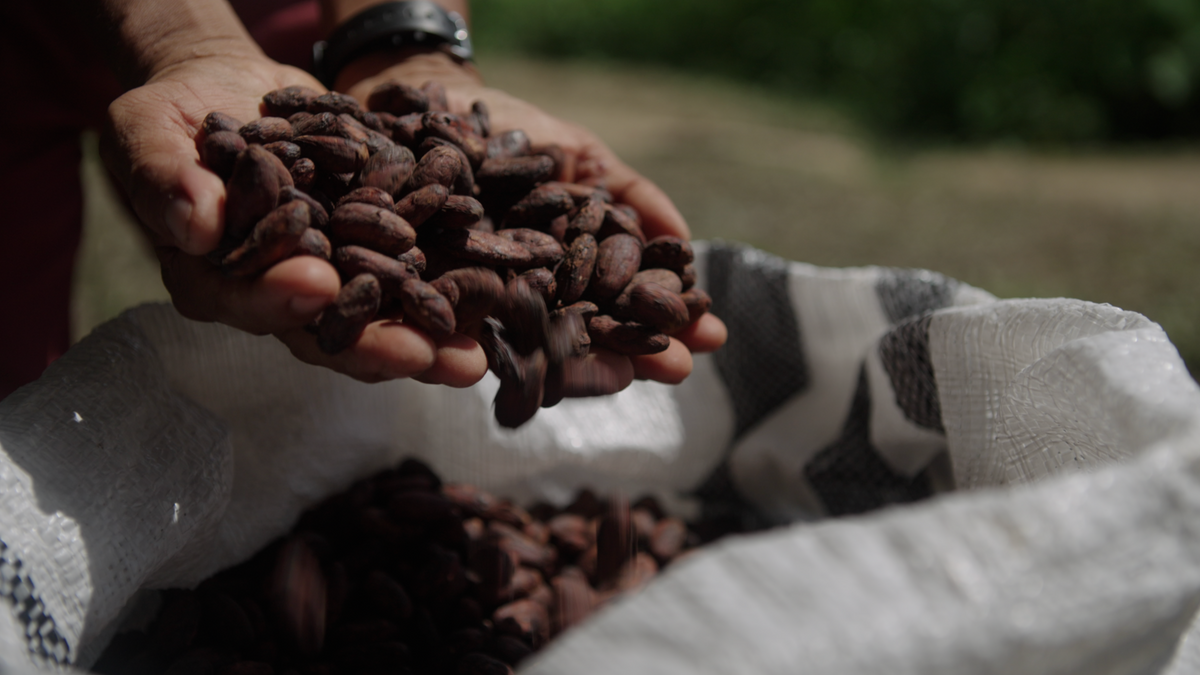
Drying: After fermentation, the sticky beans are spread out under the sun to dry, reducing their moisture so they can be safely shipped to chocolate makers.
Once dried, these seeds are officially what the industry calls "cocoa beans"—the essential building block of all chocolate.
Why the Origin and Quality of the Bean Matters
Just like wine grapes or coffee cherries, chocolate beans absorb the characteristics of their environment. This is known as terroir. A bean grown in the volcanic soil of Ecuador will taste vastly different from one grown in the lush rainforests of Madagascar.
When creating high-quality chocolate, sourcing isn't just about finding ingredients; it’s about finding the right flavor profile. Mass-produced chocolate often relies on bulk-grade beans, using heavy roasting and excessive sugar to mask bitterness or inconsistencies.
The Quality Difference: Premium chocolate making takes the opposite approach. We select beans from specific regions where farmers prioritize meticulous fermentation and drying. When a bean is treated with respect at the farm level, its natural flavors—whether notes of red fruit, warm spice, or earthy nuttiness—shine through. This allows us to craft bars that need fewer additives to taste extraordinary.
At Cacao Adventures, the best brand of ceremonial cacao, you can find cacao beans from the High-Amazon region in Peru.
Moving Beyond the Myth: Fine Flavor vs. Bulk Cacao
For a long time, the world categorized chocolate beans into basic, outdated groups like Criollo or Forastero. Today, modern genetic mapping and craft chocolate standards have completely changed the conversation. We now look at cacao through a much more accurate lens: Bulk Cacao versus Fine Flavor Cacao.
Bulk Cacao: Grown primarily for high yield and disease resistance. These beans have a very flat, intense, and bitter "industrial chocolate" flavor. They require heavy processing, chemical alkalization, and a lot of sugar to taste palatable.
Fine Flavor, Heirloom Cacao: Representing only a small percentage of global production, these are genetically diverse, estate-grown beans. They are prized for their nuanced, complex tasting notes - ranging from bright citrus and jasmine florals to deep caramel and tobacco.
By focusing on Fine Flavor and Heirloom designations, craft chocolate makers support agricultural biodiversity and ensure that farmers are paid premium prices for preserving these exceptional flavors.
From Bean to Bar

Once the dried chocolate beans arrive at the workshop, the final transformation begins. They are gently roasted to unlock their full aromatic potential, cracked open to remove the outer husks, and ground down into a smooth liquid called chocolate liquor.
The next time you enjoy a piece of chocolate, take a moment to let it melt on your tongue. You aren't just tasting sugar and cocoa; you are tasting the soil, the climate, and the careful hands of the farmers and makers who guided those "chocolate beans" from a tropical tree right to your wrapper.