Buying chocolate as a gift feels low-risk compared to most gift categories, which is exactly why people default to grabbing whatever’s near the checkout line. A little more attention produces a noticeably better result, and it doesn’t take much more time. Here’s what actually matters.
Start with who you’re buying for, not the product
Before looking at any specific box, sort the recipient into a rough category: someone who already loves dark chocolate and would appreciate something more intense or unusual; someone with a fairly standard sweet tooth who’ll enjoy milk chocolate or lower cacao percentages; someone health- or wellness-conscious who might prefer nibs or ceremonial cacao over a standard sweetened bar; or someone who genuinely doesn’t have a strong preference, for whom a sampler or tasting-format gift removes the guesswork. This one decision narrows the entire search dramatically.
Check the ingredient list before the packaging
Packaging is the first thing you see and the last thing that matters. Before finalizing a purchase, look at the actual ingredient list: a shorter list (cacao, sugar, sometimes cacao butter or milk) generally signals a more straightforward, higher-quality product than a long list including lecithin, artificial flavoring, or vegetable fat substitutes standing in for real cacao butter.
Look for a stated origin, not just a percentage
Cacao percentage (the “70% dark chocolate” number) tells you the ratio of cacao-derived ingredients to sugar, but it says nothing about where the cacao came from or how it was grown and processed. A stated origin — ideally a specific country and region, not just “cacao blend” — is a stronger signal of a maker who’s paying attention to sourcing, which tends to correlate with attention to every other stage of production.
Match format to the relationship
A single, larger bar reads as a smaller, more casual gift — appropriate for a coworker, acquaintance, or lower-stakes occasion. A curated multi-piece box or tasting set reads as more considered and is better suited to closer relationships or more significant occasions. Bulk or baking-format chocolate is a poor gift format for anyone except a dedicated home baker, since it doesn’t feel like a personal gift so much as a supply purchase.
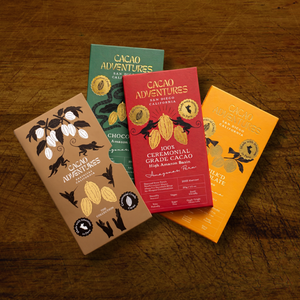
A set like the Cacao Adventures bean-to-bar chocolate collection — three single-origin bars at different cacao percentages — sits comfortably in that “more considered” tier without requiring you to know the recipient’s exact chocolate preference in advance.

Watch for common red flags
A few signals suggest a chocolate gift is more marketing than substance: “gourmet” or “premium” used with no supporting specifics elsewhere on the packaging or product page; a long ingredient list dominated by additives rather than cacao and sugar; origin described only as a broad continent or “imported cacao” with nothing more specific; and packaging that’s clearly the majority of what you’re paying for, with a small or low-quality chocolate portion inside.
Timing and shelf life
Chocolate has a genuine shelf life — well-made dark chocolate can last many months to a year properly stored, while chocolate with dairy content (milk chocolate, filled pieces) has a shorter window. If you’re buying ahead of an occasion, check any stated best-by guidance rather than assuming all chocolate keeps indefinitely, and avoid extreme temperature exposure during shipping or storage, which can cause visible (though not unsafe) bloom on the surface.
The one-sentence version
Buy based on the recipient’s actual taste profile, check the ingredient list and origin before the packaging, and match the format (single bar vs. tasting set vs. bulk) to how significant the occasion and relationship actually are. That’s the entire framework — everything else is detail.