Craft chocolate can be an intimidating category to walk into cold — unfamiliar origin names, cacao percentages ranging from 55% to 100%, and price points well above what most people are used to paying for a bar of chocolate. None of that needs to be intimidating once you know how to approach it as a beginner, rather than trying to figure out everything at once.
Don’t start at the extremes
The most common beginner mistake is starting with a very high cacao percentage bar (85% and above) because it sounds like the “serious” or “advanced” choice. For a first bean-to-bar experience, that’s usually the wrong entry point — high-percentage bars can taste intensely bitter to a palate that’s only used to standard milk or semisweet chocolate, and a rough first impression can put someone off the entire category. A better starting range is roughly 65–75%, which is intense enough to taste genuinely different from commercial chocolate, but not so intense that bitterness dominates before you can notice anything else.
Prioritize variety over intensity for your first purchase
Rather than buying one very expensive single bar, a first bean-to-bar purchase is better spent on a sampler or small-format set that includes a few different origins or percentages. This does two things at once: it lowers the financial risk of not liking any single style, and it immediately teaches you, through direct comparison, that “chocolate” isn’t one flavor — origin and percentage both move the needle meaningfully, and you’ll learn your own preference far faster by tasting several side by side than by committing to one bar and hoping.
What a good beginner lineup actually looks like
A well-built starter set for someone new to craft chocolate should include: at least two different cacao origins, so you can notice that origin genuinely changes flavor; a percentage range that stays mostly in the 60–75% band rather than jumping straight to extremes; and short, legible ingredient lists across every piece, so you’re comparing cacao and origin — not comparing different levels of added sugar or filler.
How to taste your first bean-to-bar chocolate properly
Don’t just unwrap and bite. Use the tasting approach covered in the previous article in this series: look at the surface and snap, smell before tasting, let each piece melt slowly rather than chewing immediately, and pay attention to how the flavor changes as it melts rather than judging only on first impression. This matters even more for a first-time taster, because rushing through a high-quality bar the same way you’d eat a candy bar is the single fastest way to miss what actually makes it different.
What to expect (and not expect) the first time
Don’t expect every bean-to-bar bar to taste dramatically sweeter or richer than what you’re used to — many will actually taste less sweet, since they typically use less sugar than commercial chocolate relies on to mask flavor inconsistency. What you should expect is more distinct, more varied flavor from bar to bar, more noticeable texture and snap, and a very different sense of what “70% dark chocolate” can taste like depending entirely on which maker and origin produced it.
Where to go from here
Once you’ve tasted a small starter range and identified which origin or percentage style you gravitated toward, that’s the point to start exploring more deliberately in that direction — a specific region, a specific percentage band, or a specific maker’s style — rather than continuing to sample at random. Craft chocolate rewards this kind of gradual, comparison-based exploration far more than it rewards jumping straight to the most expensive or most extreme bar on the shelf.
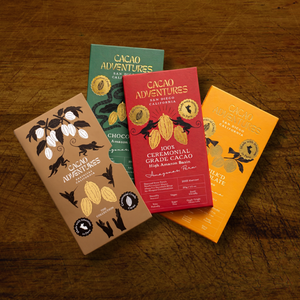
If you’d rather not build a starter set piece by piece, our own bean-to-bar chocolate collection was put together with exactly this beginner logic in mind: a 53% dairy-free bar, a 70% bar, and a 100% pure cacao bar, all from a single Peruvian origin, so you can taste your way from approachable to intense without committing to full-size bars of each before you know your own preference.
There's a difference between sourcing cacao and sourcing from someone. We purchase our beans — not nibs — directly from communities in the Amazon, working hand in hand with the farmers themselves rather than through a chain of processors and traders. That direct relationship is what turns "bean to bar" into something more accurate: farm to bar, from the people who grow it to the bar in your hand.