“They have everything” is the hardest gifting brief there is, because it usually means the obvious categories — gadgets, clothes, home goods — are already covered or too personal to guess right. Food and drink gifts sidestep that problem entirely: almost no one already owns “enough” good chocolate, and a well-chosen box reads as thoughtful rather than a last-minute default, provided it’s the right kind of box.
Why chocolate solves the “has everything” problem better than most gifts
A chocolate gift is consumable, which removes the risk that comes with every physical gift for someone with a full house or a minimalist streak — it won’t sit unused in a drawer. It’s also genuinely personal to choose well: a generic drugstore assortment reads as an afterthought, while a thoughtfully curated box of origin-specific, small-batch chocolate signals that you put in real consideration, without requiring you to know their exact taste in advance.
What separates a genuinely good chocolate gift box from a generic one
The difference is almost entirely in specificity. A generic box lists “chocolate assortment” with no other detail — no origin, no cacao percentage, often not even real cacao content information beyond “milk” or “dark.” A genuinely good gift box tells a story you can pass along: where the cacao is from, how it differs across the pieces included, and why the variety was chosen the way it was.
Concretely, look for a box that includes real variety in cacao percentage or origin rather than near-identical pieces in different shapes; a stated ingredient list you can actually read (short is a good sign); and enough context — even a small included card or description — that the recipient understands what makes the selection interesting, not just “chocolate, but nicer packaging.”
A sampler format specifically solves the gifting problem well

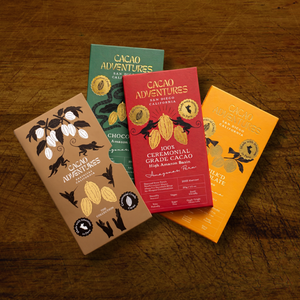
Sampler-style boxes — several distinct bars or pieces representing different origins or cacao percentages — tend to outperform single-flavor boxes as gifts for exactly the “has everything” audience, because they let the recipient taste a genuine range and form their own preference, rather than betting the whole gift on one flavor profile you had to guess at. It also gives them something to talk about or share, which single-bar gifts generally don’t. We built our own bean-to-bar chocolate collection sampler around exactly this logic — three single-origin Peruvian bars spanning 53% to 100% cacao, so the person receiving it gets a real range to explore rather than one guess about their taste.
Before a bar of our chocolate ever touches a mold, it starts as a whole bean in the hands of an Amazon farming community. We don't buy pre-processed nibs from a broker — we go straight to the source, purchasing the raw beans themselves and building direct relationships with the growers who cultivate them. It's a longer road than most chocolate makers take, but it's the only way we know how to call something truly farm to bar.
Practical selection checklist
When you’re comparing chocolate gift box options, run through this quickly: Does the product page name specific cacao origins, not just “premium cacao”? Is there real variety across the pieces (different percentages, origins, or styles), or is it the same chocolate cut into different shapes? Is the ingredient list short and legible? How does this chocolate processing look like? Does the packaging feel gift-worthy on its own, or will it need to be transferred to something else before giving?
Timing note
Chocolate gift boxes see predictable demand spikes around major gifting occasions, but a well-sourced, well-packaged box works as a genuine gift far outside those windows too — as a thank-you, a “thinking of you,” or a hosting gift, precisely because it doesn’t carry the same occasion-specific weight that flowers or greeting cards do. That makes it one of the few gift categories worth keeping in mind year-round rather than only reaching for during peak seasons.