“Chocolatier” and “chocolate maker” get used like they mean the same thing — someone good with chocolate. They don’t. They’re two different crafts, starting from two different raw materials, and the distinction actually changes what you’re tasting when you bite into a bar.
Two different crafts, mistaken for the same job
Most people assume a chocolatier is just a fancier word for someone who makes chocolate from scratch. It isn’t. A chocolatier and a chocolate maker sit at opposite ends of the chocolate timeline — one starts with a raw cacao bean, the other starts with chocolate that’s already been made. Knowing which one you’re buying from tells you a lot about what you’re actually paying for.
What a chocolate maker actually does
A chocolate maker starts with raw cacao beans — fermented and dried, but otherwise untouched — and takes them through every step it takes to become chocolate:
-
Roasting the beans to develop flavor
-
Cracking and winnowing them to separate the nib from the shell
-
Grinding the nibs into a paste (chocolate liquor)
-
Conching and refining that paste for days to smooth out texture and round out flavor
-
Tempering and molding the finished chocolate into bars
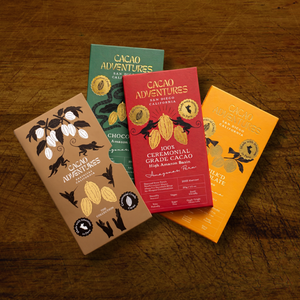
This is the part of the process where flavor actually gets decided — through which beans are chosen, where they’re grown, how they’re fermented, and how they’re roasted. A chocolate maker’s fingerprints are on the cacao itself, not just what gets added to it afterward. This is also called “bean-to-bar,” and it’s the process behind every bar we make: we hand-select whole cacao beans directly from small growers and indigenous communities across Peru’s High Amazon Basin and Tropical Desert regions, and take them through the entire process ourselves — farm-to-bar, not just bean-to-bar.
What a chocolatier actually does
A chocolatier starts somewhere completely different: with finished chocolate, usually called couverture, that was already made by a chocolate maker or a large producer. Their craft happens after that — melting and tempering that chocolate, then shaping, filling, and decorating it into bonbons, truffles, filled bars, bark, and other confections.
A skilled chocolatier is a real craft — flavor pairing, precise tempering, delicate filling work, presentation — but it’s working on top of a base flavor that someone else already locked in. The chocolate itself was decided upstream.
Why the distinction matters when you're buying chocolate
If what you want is to actually taste a specific cacao — its origin, its terroir, how it was fermented and roasted — you want a chocolate maker’s bar, ideally single-origin, where nothing is layered on top to mask or blend the base flavor. If what you want is a filled, decorated confection built around a flavor pairing, a chocolatier’s bonbon is the better choice — but you’re tasting their technique and filling more than you’re tasting the cacao itself.
Neither one is “better.” They’re different crafts answering different questions. The problem is only when the label gets blurred — when “artisan” or “premium” packaging implies bean-to-bar work that never actually happened.
Where Cacao Adventures fits in
We’re chocolate makers, not chocolatiers. Every bar we sell starts as whole cacao beans bought directly from growers — never as pre-made couverture from someone else’s factory. The easiest way to actually taste what that means is our 3-Bar Bean-to-Bar Dark Chocolate Set: three intensities — 100%, 70%, and 53% — of the same direct-traded, bean-to-bar process. What changes bar to bar are a chocolate maker’s choices, not a chocolatier’s additions.
The takeaway
A chocolatier works with chocolate. A chocolate maker makes it. Both are real crafts — but only one of them determines what the cacao itself actually tastes like. When a bar tells you where the beans came from and who grew them, that’s usually your clearest sign you’re looking at a chocolate maker’s work, not a chocolatier’s.
Taste the difference for yourself
Try the 3-Bar Bean-to-Bar Dark Chocolate Set — three intensities, one direct-traded process, every percentage explained. Or explore The Collection and our Ceremonial Grade Cacao to see the full range of what bean-to-bar, farm-to-bar sourcing looks like.