The word "ceremonial" is not regulated. Any brand can put it on a label, which is why two bags of ceremonial cacao can be very different products at very different prices. Before you buy, from us or from anyone else, these seven questions will tell you most of what you need to know. They are especially useful during a sale, when you are comparing brands side by side.
1. Is it 100% cacao, with nothing added?
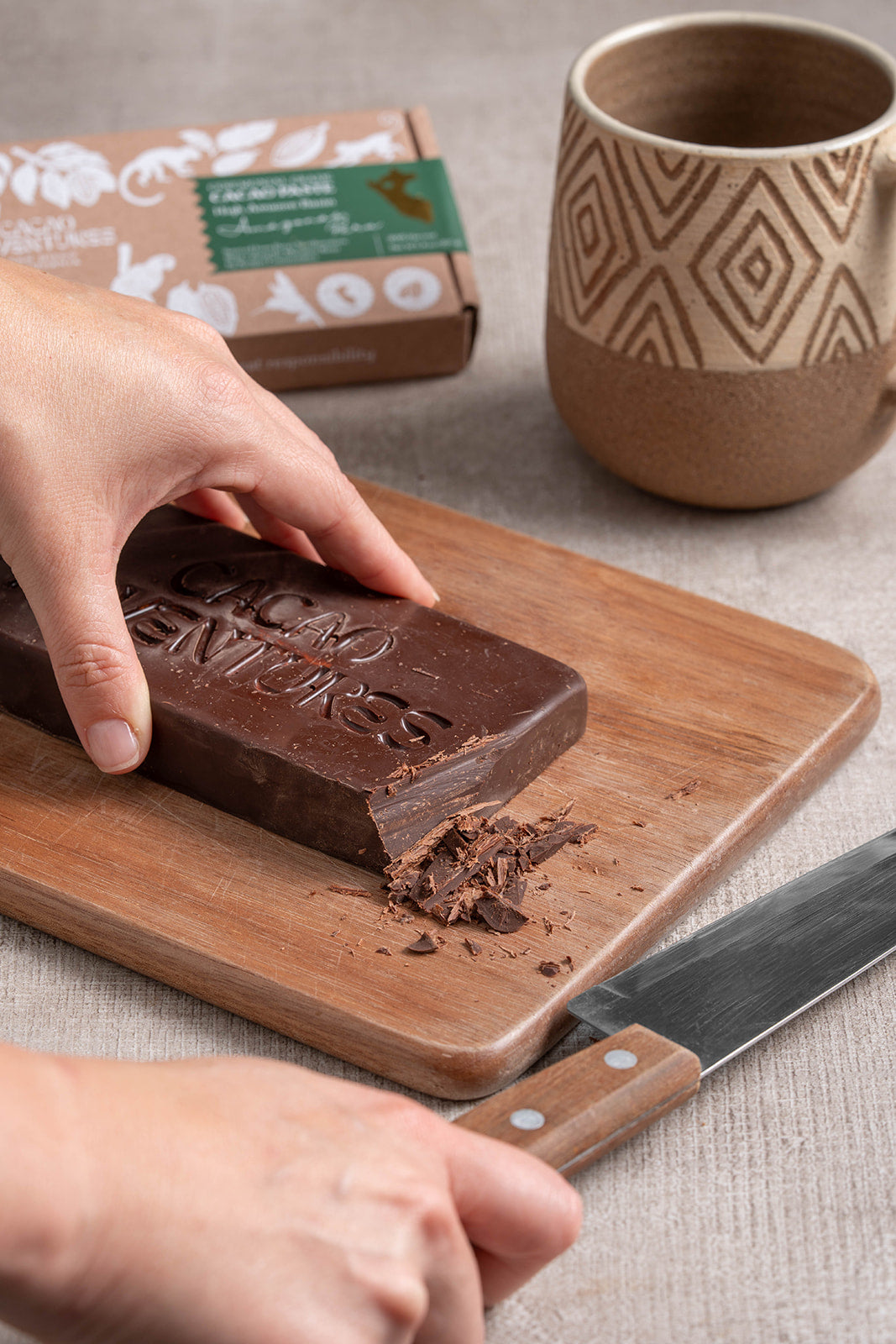
The ingredient list should say cacao and nothing else: no sugar, no vanilla, no emulsifiers, no added fats. The cacao butter should still be in the product, not removed. Be wary of anything sold as a powder or a drinking chocolate mix. Our ceremonial vs. regular cacao guide explains the difference.
2. Where exactly was it grown?
"Peru" or "South America" is a start, not an answer. Look for a region, ideally with details like altitude, climate and who grows it. We name ours: High-Amazon Basin (Amazonas), Sacred Valley (Cusco) and Tropical Desert (Piura). Read what makes each cacao unique to see what a specific origin looks like.
3. What variety is it, and is it single-origin?
Single-origin cacao tastes like a place, and a brand that can tell you the variety (Chuncho, Piura Blanco, a wild strain mix) knows its supply. Blends are not wrong, but a blend hides what you are tasting. Our article on hybrid vs. heirloom cacao explains why this matters.
4. How is it processed?
Ask about fermentation, drying, roasting and whether it has been alkalized (also called Dutch-processed). Alkalizing darkens cacao and mellows its flavor, but it also reduces its natural compounds. Ours is never alkalized; you can read how we handle it in Is Cacao Adventures cacao processed?
5. Has it been tested for heavy metals, and can you see the results?
Cacao can take up heavy metals from soil, so this is a fair question for any cacao product. The best answer is lab results for each lot, shared openly. We publish ours: see our heavy metal results, and why we test.
6. Who grows it, and how is the supply chain built?
A short supply chain, with direct relationships with farming families, usually means more transparency and a fairer return for the people who grow the cacao. Ask whether the brand knows the families by name and visits them. Read how we source wild cacao, and why we are not certified organic, which shows why a label is not the whole story.
7. What does one cup cost?
Compare the price per cup, not the price per bag. A pound is about 454g, and an everyday cup is 21g, so a pound makes about 21 cups. Divide the price by the number of cups and compare. Our guide to how much ceremonial cacao you need has the math.
A quick scorecard
If a brand cannot answer at least five of the seven clearly, keep looking. If you want a longer checklist, see the buyer's guide to authentic ceremonial cacao and our ultimate guide to choosing high-quality ceremonial cacao.
How we answer them
You can browse everything we make in the ceremonial cacao collection, or try all three origins in the Origin Explorer. Questions about anything on this list? We are happy to answer them.
Keep reading: is Black Friday a good time to buy ceremonial cacao? · Black Friday ceremonial cacao deals