If you’ve ever looked at a bar of chocolate and wondered why one costs $2 while another costs $12, the answer is almost always hidden in the cacao bean.
Cacao beans are the seeds of the Theobroma cacao tree, but they are far from a uniform commodity. Think of cacao beans as grapes; while most edible grapes are roughly fungible (buying these from different brands doesn’t make a difference), wine grapes are most definitely not; wine makers either grow their own grapes or contract with specialty wine grape growers who specialize in viticulture.
To understand cacao beans is to understand the difference between a “whatever” grape and a high quality, intentionally grown wine grape. Purchasing and consuming high quality cacao beans is, in our opinion, the best thing you can do for your cacao journey. This guide breaks down everything you need to know about selecting the best cacao for your health and your palate.
Quality First: What Makes a "Good" Cacao Bean?

When you’re shopping for cacao beans (whole, broken, or nibs), you aren’t just looking at whether they’re “raw” or “roasted.” You’re looking at a combination of genetics, origin, and process that shows up directly in the bean.You’re looking at a combination of Genetics, Origin, and Quality in the form of flavor complexity and moisture.
Good beans typically have:
-
Clean, pleasant aroma when you open the bag (chocolatey, fruity, nutty — not musty or smoky).
-
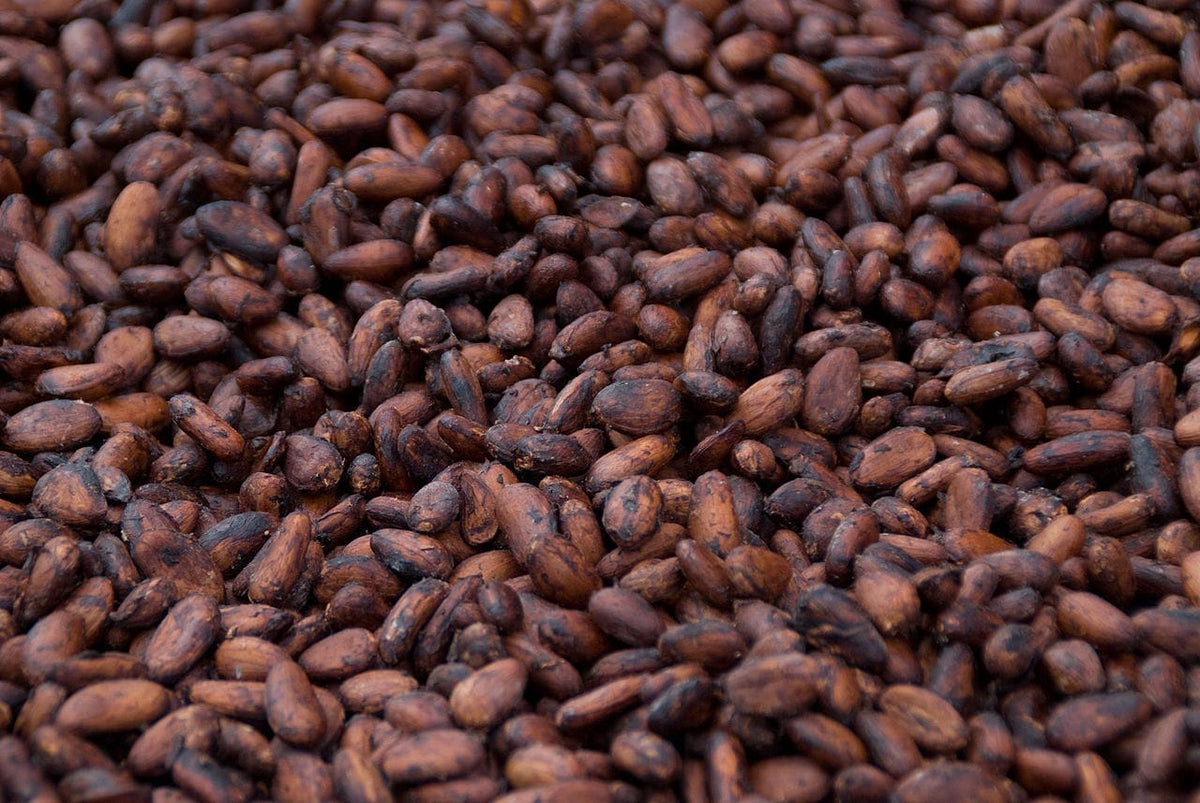
Dry but not brittle texture, with no visible mold, insect damage, or white fuzz.
-
Uniform size and color, not a random mix of pale, blackened, and shrunken beans.
-
A clean, lingering flavor when you bite into one — even if they’re bitter, they shouldn’t taste dirty, moldy, like burnt smoke.
-
A roughly 4/5 distribution between bitter and pleasant beans.
If you pour some beans into your hand and they smell off, look uneven, or crumble into dust, you’re probably not dealing with high‑quality cacao.
1. Genetics and Clusters
Instead of repeating the old “Criollo vs Forastero vs Trinitario” classification, modern cacao producers increasingly talk about genetic clusters and origins. For a bean buyer, that means:
-
Some beans come from Criollo‑influenced or Nacional‑type clusters that tend to be more aromatic and less harsh. These will typically come from Central America or the High Amazon Basin (Peru, Colombia, Ecuador) where Criollo and Nacional beans are known to have originated respectively.
-
Others come from Amelonado‑type or mixed clusters that are robust, reliable, and more “classic cacao” in flavor, like Peruvian or Brazilian wild beans.
-
You’ll also see beans marketed by specific Amazonian or heirloom sources, reflecting wild or semi‑wild genetic clusters. In this case, a unique population of beans is being harvested intentionally to provide a unique and complex flavor.
You don’t have to memorize cluster names, but you can use this as a rule of thumb: if a seller talks about genetics, origin, and flavor notes, they’re treating beans like wine grapes — which usually means more intentional selection and better quality.
2. Origin and Terroir for Bean Buyers
With whole beans, origin is not just a story; you can literally smell and taste it.
Common patterns you can highlight for your readers:
-
Some origins skew bright and fruity (think dried fruit, citrus, berries).
-
Others skew nutty, earthy, or spicy (nuts, tobacco, warm spices, wood).
-
High‑humidity or poorly dried origins can lean musty or flat if handling wasn’t careful.
When buying beans:
-
Look for single‑origin or clearly stated regions (e.g., “Peru – Cusco,” “Ecuador – Esmeraldas”) rather than vague countries, such as “Peru or Ecuador.”
-
Consider the following: would you pay a premium for a wine bottle that can’t list a specific area in a wine growing country? Treat Cacao beans the same way. We’re not saying they need to specify the exact farm or community, but a specific growing region means they are attempting to transmit value and intention.
3. Quality: Flavor Complexity and Moisture
Regardless of whether you’re purchasing beans to eat raw or beans to make your own chocolate preparation with, the flavor of the beans should be exciting.
It is very important to keep in mind that fermentation, no matter how precise, will usually not go above an 80% score, meaning that around 1 of 5 beans in a bag will probably have a bitter, or at least sub-part flavor. However, 4 out of every 5 beans will have a great flavor to them and should provide an exciting and complex flavor profile.
If you plan on making some sort of chocolate preparation with these beans, the mixture of the 4 great beans with the 1 sub-par bean will even out the flavor profile and make it a bewildering experience, provided you purchased high quality beans.
Beans should also be around 7.5%-8.0% moisture. Unless you have a special humidity testing device, you will not be able to verify this, however a visual inspection can help determine whether this level of moisture has been reached by determining how easily they break.
How to Visually Inspect Beans
When inspecting beans, we recommend you:
-
Look: Pour some out onto a white plate. Are they fairly uniform in size and shape? Do you see mold, webbing, or obvious insect damage? Are many beans broken or shrunken?
-
Break: Crack a few open. The inside should be solid, fairly dry, and even in color. Very pale, chalky interiors or black, crumbly centers signal problems.
-
Hard to crack beans means the humidity is too high
-
Overly crumbly beans means the beans are too dry or may have been roasted.
-
Smell: Bring a handful to your nose. You want cacao, not mildew, cellar, chemical smoke, or “old nuts.”
-
Taste a tiny piece: Even raw beans will be bitter, but they should have a clean bitterness and some aromatic interest, and some fruity-ness should come through when tasting, not a muddy or dirty aftertaste.
Fair Trade and Ethical Sourcing
Cacao has a complicated history with labor. "Fair Trade" or "Direct Trade" labels aren't just marketing—they are indicators of quality. When farmers are paid a premium above the market price, they can afford the labor-intensive processes of proper fermentation and drying, which are essential for a bean to develop its best flavor. This is exactly how Cacao Adventures works. You can check our work with communities here.
The Reality of Heavy Metals in Cacao
One of the most important things for a modern consumer to understand is the presence of heavy metals, specifically Cadmium and Lead, in cacao.
Why do they happen naturally?
Cacao trees are "bio-accumulators." In certain regions—particularly in Latin America and the Caribbean—the soil is naturally rich in minerals due to volcanic activity. The trees pull Cadmium from the earth and deposit it directly into the beans. Lead, conversely, often settles on the outside of the beans during the drying process if they are exposed to industrial dust or leaded gasoline fumes nearby.
Health Effects and Safety
-
Long-term exposure: Chronic ingestion of high levels of heavy metals can lead to kidney issues, bone demineralization, and developmental concerns in children.
-
What can be done? High-quality brands perform third-party lab testing on every batch. They monitor "Maximum Allowable Dose Levels" (MADLs).
-
Pro-Tip: Cacao beans will not have any sugar, meaning it has not been “diluted” like chocolate has, and may have higher metal concentrations than chocolate. Always look for brands that are transparent about their heavy metal testing results.
You can check Cacao Adventures heavy metals testing results here.
Understanding Ceremonial Grade Cacao
You may have seen "Ceremonial Grade" appearing on labels. While there is no official government "certification" for this, the industry generally follows these standards:
Pure: It is 100% intentionally grown and processed cacao, usually fermented and dried together in small batches.
Minimal Processing: It is well fermented and sun-dried to keep the theobromine (the heart-opening stimulant) and antioxidants intact.
High-Quality Genetics: It almost always uses "Ancient" or "Native" beans rather than industrial hybrids.
Intentionality: Beyond the physics, it is sourced with deep respect for the land by indigenous cultures or small family farmers who know where their cacao is going and take exceptional pride and care since they are typically paid premiums and want to keep a positive system working for themselves, their families, and their communities.
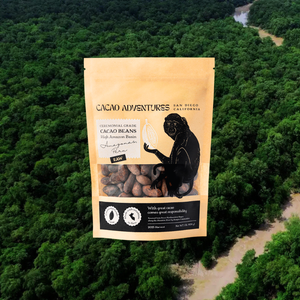
Explore our cacao beans from the High-Amazon Basin region grown by Indigenous Awajún Communities
The Origins: Where Does Cacao Come From?
Cacao thrives in the "Cocoa Belt"—the narrow strip of land 20 degrees north and south of the equator.
West Africa (Ivory Coast/Ghana): Produces about 70% of the world’s bulk cacao.
Central & South America: The genetic birthplace of cacao. This is where you find the rare, "fine flavor" beans used in premium craft chocolate - like Cacao Adventures bars.
Southeast Asia: Known for more acidic, earthy profiles
A Brief History
While we enjoy cacao as a treat today, for the Maya and Aztecs, it was literal currency. It was known as yollotl eztli, or "heart's blood." It wasn't eaten as a solid bar until the mid-19th century; for most of human history, cacao was a bitter, spicy drink consumed by royalty, warriors, and priests to provide energy and spiritual clarity.
However, the oldest known consumption has been found in Latin America, through excavations in the High Amazon Basin between modern day Peru and Ecuador by a little-known culture we now call the “Mayo-Chinchipe” where excavations at Huaca Montegrande and Santa-Ana La Florida have revealed that this culture revered cacao and even buried their dead with trinkets resembling cacao beans.
The Bottom Line: When choosing cacao, look beyond the wrapper. Prioritize single-origin, tested for heavy metals, and ethically sourced. Your body—and the planet—will taste the difference.
Explore our cacao beans from the High-Amazon Basin region