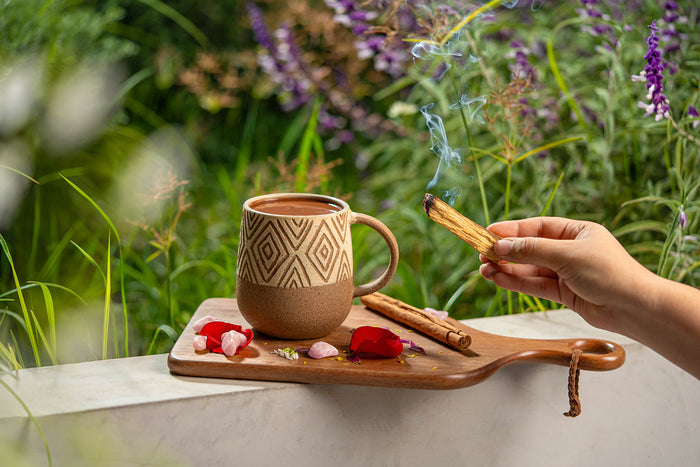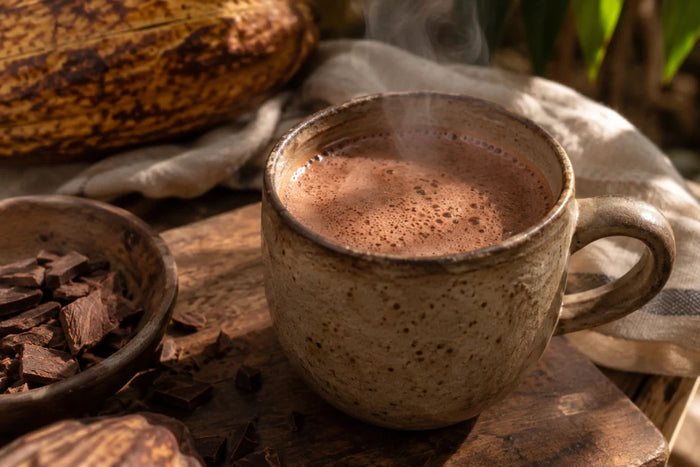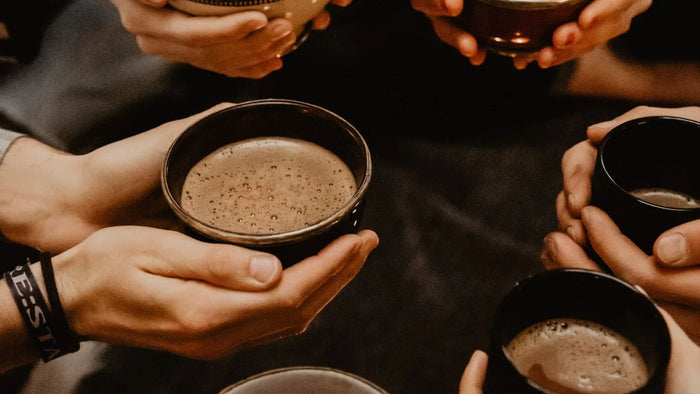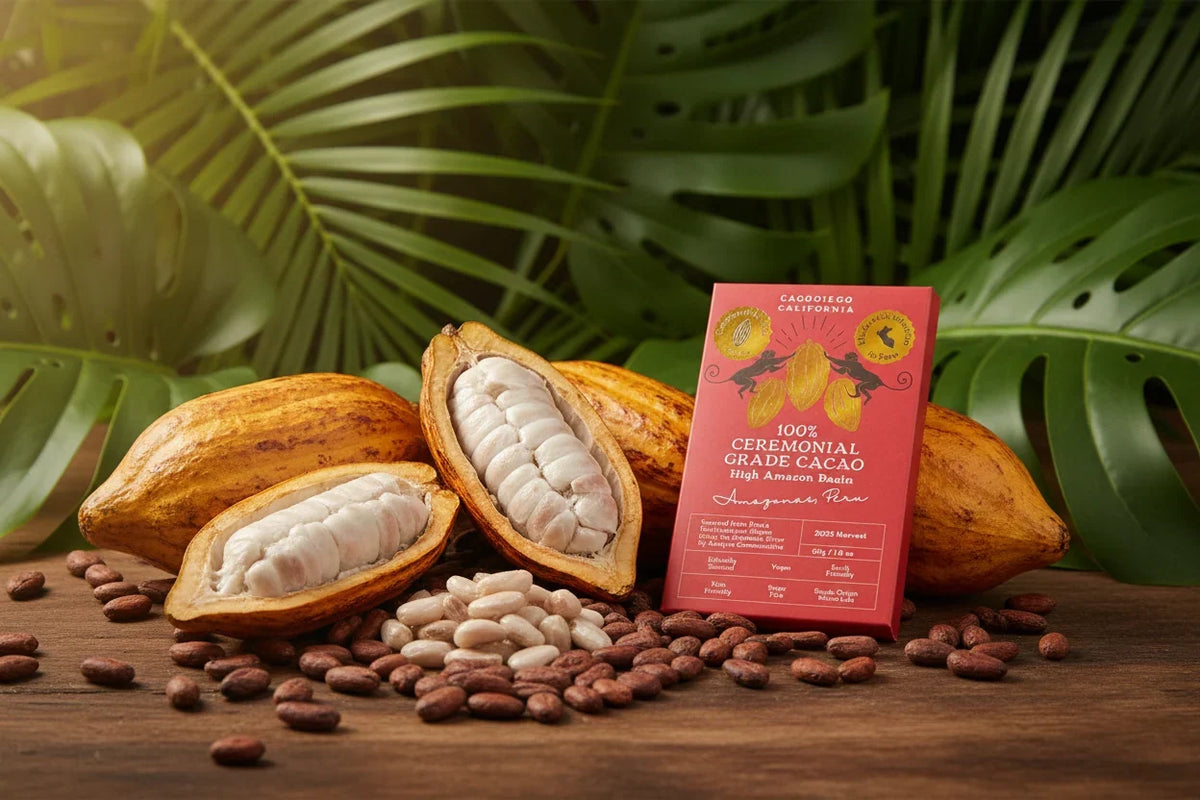
Peru is not one flavor. The cacao we work with grows in three very different places, from humid rainforest to a coastal desert to the high valleys near Cusco, and each origin tastes like where it comes from. The best way to understand that is to taste them side by side. This guide shows you how to set up a simple home tasting of our three origins, what to look for, and how to make it a good evening.
Meet the three origins
High-Amazon Basin (Awajún territory, Amazonas)
- Altitude: 250–650 meters, humid tropical rainforest
- Variety: a wild mix of Amelonado, Criollo and Nacional
- Profile: deep, bold, earthy and richly heart-opening
- Grown by indigenous Awajún communities far from any urban center
Sacred Valley (Quillabamba, Cusco)
- Altitude: 1,000–1,800 meters, subtropical highland with cool nights
- Variety: heirloom Chuncho, one of the oldest known varieties of cacao
- Profile: soft, grounding and floral
- Grown by smallholder farmers who have preserved Chuncho genetics for generations
Tropical Desert (Piura, northwestern Peru)
- Altitude: 150–250 meters, dry coastal valleys with high sun exposure
- Variety: Piura Blanco, a rare white-seed variety
- Profile: bright, fruity and citrus-forward, with tropical fruit notes
- Grown by multigenerational small family farmers
For the full story behind each one, read what makes each cacao unique and the story behind our three Peruvian origins.
What you need
- One coin set of each origin: High-Amazon Basin, Sacred Valley and Tropical Desert, or all three together in the Origin Explorer.
- Three identical cups, so the only difference is the cacao.
- Hot water that is not boiling (about 170°F works well), a whisk or frother, and a kitchen scale if you are using blocks.
- Water and a plain cracker or a piece of fruit to reset your palate between cups.
How to run the tasting
- Use the same recipe for all three. For tasting, make small cups: 10–15g (2–3 coins) each, with about 4 oz of hot water. A smaller cup keeps the total caffeine and theobromine reasonable, since you are drinking three. See our dosage guide for the numbers.
- Skip the sweetener and spices. You are tasting the cacao itself. You can always add honey or cinnamon in a second round.
- Go from light to bold: Tropical Desert, then Sacred Valley, then High-Amazon Basin.
- Smell first. Hold the cup under your nose before you sip. Is it fruity, floral, earthy, nutty?
- Sip slowly. Notice the first taste, the middle and the finish. Does it feel thick or light? Bitter, sour, sweet?
- Write it down. One line per cup is enough. Which one would you drink in the morning? Which one at a quiet moment?
If you want to learn how to taste more deliberately, how to taste chocolate like a pro has useful habits that apply here too.
What to look for
Expect real differences. The Tropical Desert cup tends to be the lightest and brightest. Sacred Valley is the softest and most aromatic. High-Amazon Basin is the deepest and boldest. Tastes vary from person to person, so use ours as a map, not a rule. There is no wrong answer.
Making it an evening
A tasting is a lovely thing to do with one or two friends or your partner. Light a candle, play something soft, and take your time. Plan it for the earlier part of the evening or the afternoon, since cacao contains caffeine and theobromine. And if anyone is pregnant, takes medication, or is sensitive to stimulants, share our safety guide and let them skip or pour a smaller cup.
Which one did you like best?
That is your next bag. High-Amazon Basin and the others are all in the ceremonial cacao collection. If you did the tasting with the Origin Explorer, you now know exactly which origin to reorder.
Keep reading: why single-origin cacao matters · Black Friday ceremonial cacao deals
This article is educational and isn't medical advice. If you have a health condition or take medication, please talk with your healthcare provider before working with ceremonial cacao.