Two chocolate bars can sit three feet apart on a shelf, cost $3 apart, and share almost nothing about how they were made. This is the comparison people actually want when they’re deciding whether the pricier bean-to-bar chocolate is worth it, or whether “craft chocolate” is just clever branding on the same commodity product.
Where the cacao comes from
Mass-produced chocolate is built on commodity cacao — beans bought on the open market, usually from West Africa (which supplies roughly two-thirds of the world’s cacao) , priced by exchange rate rather than quality, and blended from many farms and cooperatives before they ever reach a processing facility. The farmer is typically several steps removed from the brand selling the final bar, and price is set largely by global commodity markets rather than the quality or character of that specific harvest.
Bean-to-bar makers generally buy from a small number of specific farms or cooperatives, often at prices well above commodity rates, and often with a direct relationship to the grower. This is sometimes called direct trade. It’s a sourcing model, not a certification, but the practical effect is that the maker has visibility into where their cacao came from and can pay for quality rather than volume.
How the two are actually processed
Commodity chocolate production is built for speed and consistency at enormous scale. Large processors run cacao through automated fermentation and drying, industrial roasting, and conching (the process of grinding and aerating chocolate to smooth its texture) for as little as a few hours. Recipes are standardized across huge batches so that a bar made this month tastes identical to one made last year, regardless of any variation in the raw cacao.
Bean-to-bar production runs at a fraction of that scale, often literally by hand or in small-batch equipment. Conching alone can run anywhere from 24 to 72+ hours for a single batch, specifically to develop flavor rather than just achieve smooth texture. Because batches are small and origin-specific, flavor will vary somewhat from harvest to harvest — bean-to-bar makers treat that variation as a feature, similar to vintage variation in wine, rather than a defect to be engineered out.
What’s actually in the bar
This is the most concrete difference, and the easiest one to verify yourself: flip the bar over and read the ingredients.
A typical mass-market chocolate bar ingredient list might include cocoa mass, sugar, cocoa butter, milk solids, soy lecithin, and natural or artificial vanillin flavoring. Soy lecithin is added as a cheap emulsifier to help chocolate flow smoothly during high-speed manufacturing; vanillin masks inconsistency in cacao flavor from batch to batch.
A typical bean-to-bar ingredient list runs two to four ingredients: cacao (or cocoa mass), cane sugar, and sometimes added cacao butter. No lecithin, no synthetic flavoring, no fillers. Fewer ingredients isn’t automatically better in every food category, but in chocolate specifically, it’s a direct reflection of a maker who doesn’t need additives to compensate for lower-grade cacao or industrial-speed processing. It’s the same reason our own Collection sampler can get away with a short label across all three bars — a dairy-free 53% bar sweetened with lucuma instead of milk solids, a 70% bar sweetened with organic coconut sugar, and a 100% bar with nothing added at all.
Where the price difference actually goes
A commodity chocolate bar can be produced and sold profitably in the $2–$4 range because of sheer scale: one processing facility can turn out more chocolate in a day than most bean-to-bar makers produce in a year, and that scale drives down cost per unit dramatically.
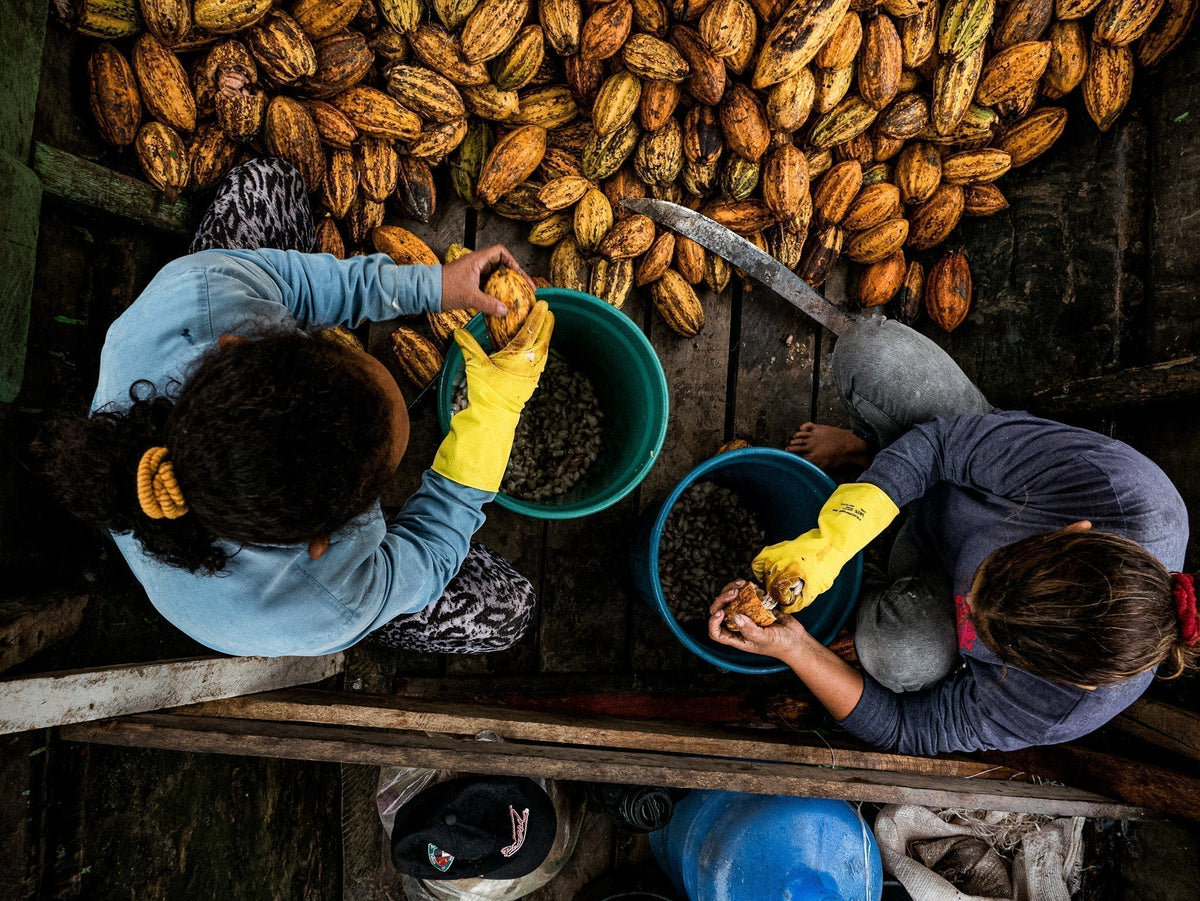
They usually work with nibs, that are convenient. Beans are honest. We choose beans — whole, unprocessed cacao purchased directly from Amazon communities — because it's the only way to control quality and flavor from the very first step. Skipping the middlemen who typically hull and crack the beans before they reach a chocolate maker means we're not just doing bean to bar. We're doing farm to bar, from the source itself.
Bean-to-bar pricing (commonly $8–$14 for a standard bar) reflects the opposite economics: higher cacao cost from direct or fair-trade sourcing, far lower batch yields, more labor per bar, and no economies of scale to spread fixed costs across. None of that guarantees the bar tastes better — but it does mean the cost structure is fundamentally different, and comparing the two prices as if they’re buying the same thing isn’t a fair comparison.
At Cacao Adventures, you can buy the 3-bar bean-to-bar chocolate, our bar flavors are all sourced ethically from indigenous communities in Peru.
So which one should you actually buy?

If what you want is a reliable, familiar, inexpensive chocolate hit, mass-produced chocolate is well-engineered for exactly that job — consistency is its entire design goal. If you’re curious what cacao actually tastes like when a specific origin, harvest, and maker’s decisions are allowed to show through, bean-to-bar is the only category built to deliver that. They’re not really competing for the same purchase, once you see what each one is optimized for.