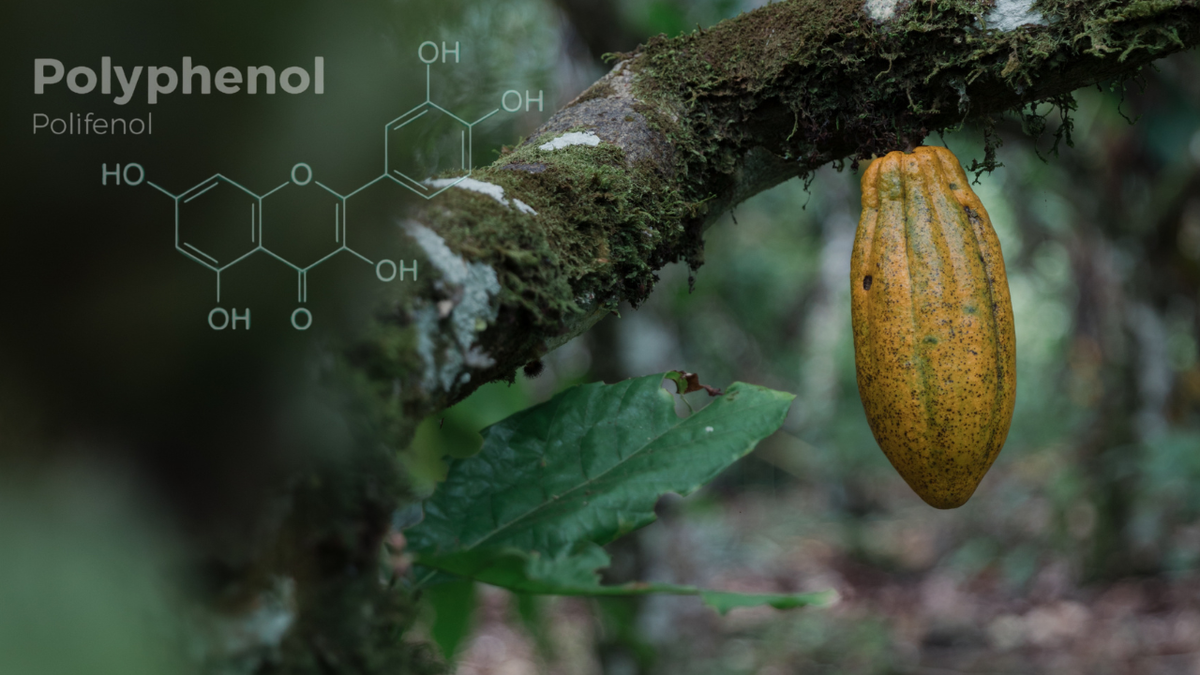
At Cacao Adventures, cacao is more than an ingredient. It is a living ally for the body, one that delivers a dense supply of polyphenols that help the body respond to oxidative stress (Study 1, Review 1, Database).
When this cacao was sent for lab testing, the question was simple: does the way it is processed actually preserve what makes cacao so valuable? Up to this point we were going off of literature values and intuition. The answer from the lab came back clearly: 90 mg of total polyphenols per gram for our High Amazon Basin and Tropical Desert ceremonial cacao, with our Sacred Valley coming in at 85 mg/g.On average, high-quality dark chocolate (above 70% cocoa) contains between 10 mg and 40 mg of polyphenols per gram of chocolate. When it comes to ceremonial cacao, the average jumps to 40 mg to 60 mg per gram. Cacao Adventures stands out by delivering double the market standards.
But what does this all really mean? Behind that lab result is the story of why this cacao feels so different in the cup and in the body.


Inside Your Body: The Daily Battle
Every moment we’re alive, our bodies are busy producing energy, repairing tissue, and maintaining countless systems. In the middle of all this activity, free radicals are also created as a normal part of metabolism (Review 2, Review 1).
Free radicals are unstable molecules that can damage cell membranes, proteins, and DNA when they accumulate. Over time, that oxidative damage contributes to wear and tear associated with aging and chronic disease (Review 2, Review 1).
Antioxidants stop the rust. They do this by donating electrons to free radicals, stabilizing them before they can trigger wider chain reactions. Cocoa polyphenols, especially flavanols, are among the antioxidant compounds most closely associated with these effects (Review 2, Review 1, Wiley Review).
Why Cacao Is Such a Potent Ally
Cacao is naturally rich in polyphenols, a family of plant compounds that includes flavanols such as epicatechin and catechin. These compounds are major contributors to cacao’s antioxidant activity (Database, Review 1, Wiley Review).
Studies show that cocoa powders and dark chocolates can vary widely in polyphenol content depending on origin and processing. Many cocoa powders on the market fall around the 40 to 60 mg/g range, especially when heavily processed, while some tested ceremonial cacao products have reported values in the 60 mg/g range. Against that backdrop, 90 mg/g total polyphenols stands out as a strong result (Study 1, Brand Test Example, General Reference).
The Whole-Bean Difference: We Don’t Strip the Soul Out
Many commercial cocoa powders are partially defatted, meaning much of the natural cacao butter has been removed. At Cacao Adventures, we believe in minimal processing so we keep our cacao whole rather than separating the fat from the solids.
That matters because the way cocoa is delivered in food influences how its compounds behave in the body. Research on cocoa polyphenols notes that bioavailability depends not just on how much is present in a lab test, but also on the surrounding food matrix, including fat and fiber (Review 1, Wiley Review).
In practical terms, retaining the natural cacao butter may help support better use of cacao’s beneficial compounds compared with a more stripped-down powdered cacao. That is best framed as a supportive whole-food advantage rather than a proven product-specific absorption claim unless direct absorption testing is available (Review 1, Wiley Review).
90 mg/g of polyphenols: What That Means in Your Mug
If a typical cocoa powder lands somewhere around 50 mg of polyphenols per gram, and some premium ceremonial cacaos test around 60 mg/g, then at 90 mg/g, our cacao sits in a higher tier of polyphenol density per gram of product (Study 1, Brand Test Example, General Reference) and this is most likely thanks to the care we take during processing. Ensuring a high fermentation so that we can roast lower, while still delivering a great flavor makes a huge difference.
Combine that higher polyphenol density with the fact that the natural fats remain intact, and the result is not just more antioxidants on paper. It is a whole-form cacao designed to help the body make better use of what is there (Review 1, Wiley Review).
Each cup becomes more than a ritual alone. It becomes a meaningful source of compounds that help support the body’s defense against oxidative stress (Review 2, Review 1).
-
Supports the body’s response to oxidative stress (Review 2, Review 1).
-
Nourishes the body with a dense source of cacao polyphenols (Study 1, Database).
-
Preserves a more whole, less over-processed form of cacao (Database, Review 1).
This Is Why We Do What We Do
Cacao Adventures is not built around a passing wellness trend. The focus is on preserving the integrity of the plant and offering cacao in a form that stays close to how nature made it but still delivering a great tasting cacao.
That means starting with high-quality beans, using gentler processing, keeping the natural fat intact, and verifying the final result with testing. It is why this cacao can be described plainly as whole, fat-intact cacao with 90 mg/g total polyphenols (Review 1).
For people who feel that this cacao lands differently in the body—more grounding, more sustaining, more nourishing—that experience aligns with a product designed to preserve both potency and wholeness (Study 1, Review 1).
Ready to Feel the Difference?
For those already part of the cacao family, this is an invitation to go deeper into the ritual and notice not just the taste, but also the way the body feels afterward. Focus, mood, and calm are all part of the lived experience people often seek from cacao rituals, even though individual responses vary (Review 1).
For those discovering it for the first time, the invitation is simple:
-
Choose cacao that is lab-tested for polyphenols (Study 1, Brand Test Example).
-
Choose cacao that keeps the natural fats intact (Review 1,Wiley Review).
-
Choose cacao crafted to support the body, not just flavor a drink (Review 1).
Explore the cacao offerings and begin a daily ritual with a plant long valued for both tradition and function (Review 1).